
You Can’t Plan for Everything.
In July, life in Ely changed overnight.
Dry conditions and high temperatures had already created dangerous conditions. Then a storm delivered more than 1,000 lightning strikes, sparking wildfires that moved frighteningly fast. Fires were moving so quickly that embers were crossing large bodies of water.
Suddenly, we were obsessively watching fire maps, checking the wind, talking about evacuation routes, and trying to decide what to do first.
Fear moved quickly, but so did action.
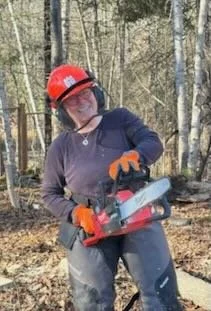
Preparing before the emergency makes a difference.
The U.S. Forest Service, Minnesota DNR, and their partners mobilized an extraordinary response. Wildland firefighters and other personnel arrived from across the country. Aircraft, equipment, weather information, public briefings, and logistical support came together with remarkable speed.
At the same time, something much less formal happened. A small ad hoc group organized to distribute masks and air purifiers, share reliable information, and connect people with resources.
One response was built on systems developed over decades. The other just emerged. We needed both.
Planning Means Choosing
When we bought our 7½ acres, little fuel-reduction work had been done in more than 20 years. Last fall, we took down 75 trees, concentrating first on the area around our house.
When firefighters came through to assess our property, they confirmed what we already knew. The house was in reasonably good shape. Our outbuildings were at much greater risk.
We had made a choice about what to protect first. We knew the outbuildings were vulnerable, but with limited time and resources, the house came first.
That is a critical part of planning. People and organizations rarely have enough time, money, or capacity to prepare equally for every possibility. Strategy requires deciding what matters most, where we are most vulnerable, and what we are willing to leave for another day.
You Cannot Control the Weather
At an early wildfire briefing, one of the officials said something that stayed with me: “Weather started the fires, and weather will end them.”
At the time, rain felt impossibly far away.
Then the rain came. The forests are wet again, the air is clear, and the immediate fear of fire has largely disappeared. It is a powerful reminder of how quickly conditions can change, for better or worse.
Organizations know this, too. A longtime funder changes direction. A key employee leaves. A government contract disappears. An unexpected opportunity opens. A pandemic arrives.
We spend a great deal of time trying to predict what will happen next. Strategic plans, budgets, forecasts, staffing models, revenue projections, and risk assessments all have a role, but none of them gives us control over the weather.
Strategy Is More Than Prediction
Organizations sometimes approach strategic planning as though the goal is to accurately predict the next three or five years. The future rarely cooperates.
That does not make planning pointless. Good strategy helps us decide where we are going and what matters most while building the capacity to respond when circumstances change.
One of the most important questions an organization can ask is, What do we need to have in place so we can respond well when something happens that we did not predict?
The answer is rarely one thing. It is strong relationships, clear communication, financial flexibility, trusted information, people empowered to make decisions, systems that work before the crisis arrives, and enough freedom to improvise when those systems are not enough.
Building for the Weather We Cannot Predict
This changes some of the questions we might ask during strategic planning. Instead of only asking, “What will we accomplish over the next three years?” we might also ask:
Where are we fragile?
What knowledge lives with only one person?
Which relationships would matter if conditions changed quickly?
Where do people need greater authority to act?
What do we need to protect first?
Those questions can help build an organization that can respond to the world as it actually unfolds.
The fires around Ely reminded me that circumstances can change much faster than we imagine. We cannot build organizations, communities, or lives around the assumption that we know exactly what is coming.
We can build the capacity to meet it.
Perhaps that is one of the most important things a good plan can do.